Paper sheets, group chats and a good memory.
Coaching a club is more than coaching. Between trainings there are fees to chase, permission forms to collect, families to keep in the loop and a schedule that changes every week.
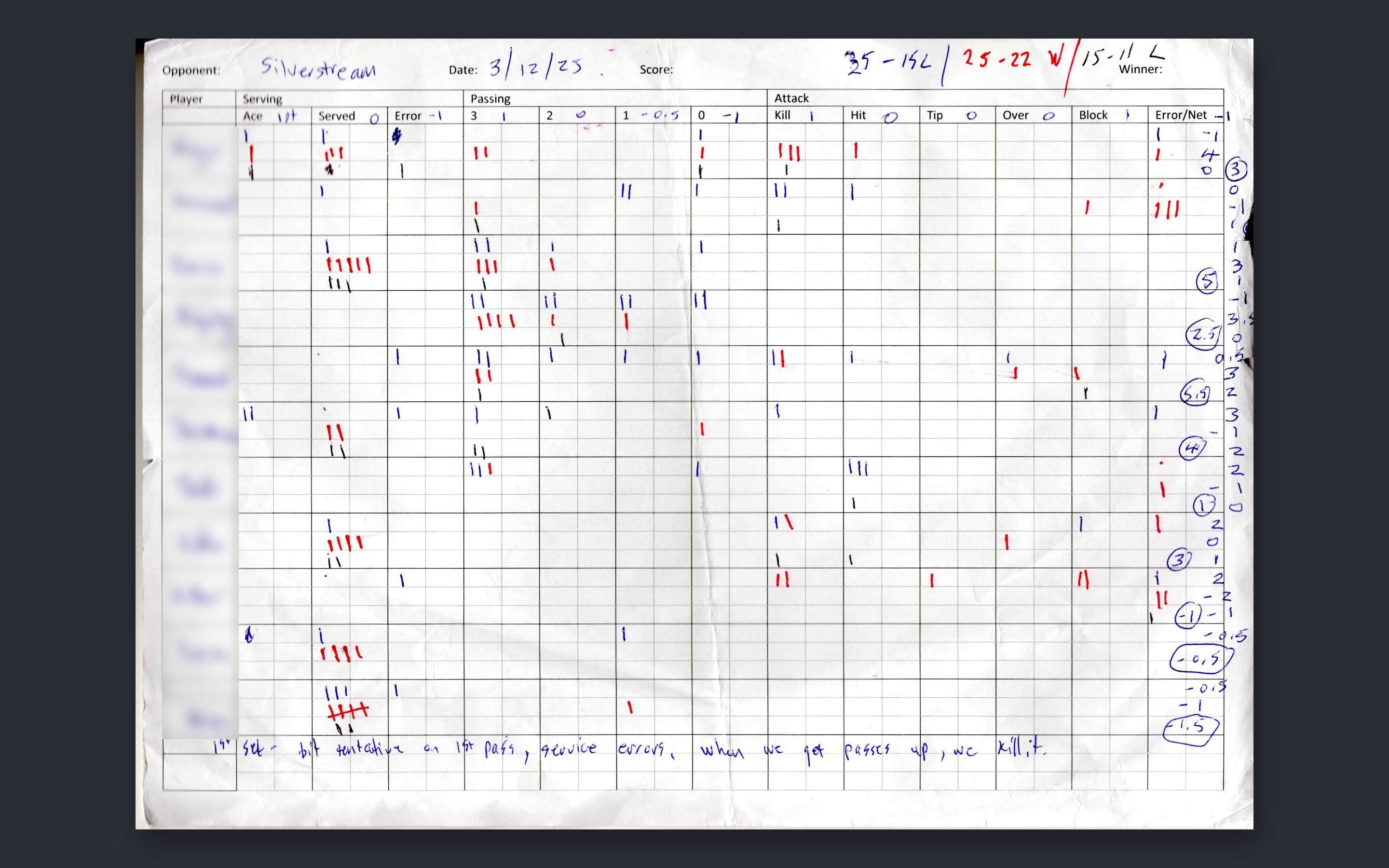
On match day, stats went onto a paper sheet: a tally for every serve, pass and attack, with the coach's notes written along the bottom. It was a smart system, but it took ages to type up, if it got typed up at all. And the part of the game the coach cared most about, how players reset after a mistake, wasn't written down anywhere.
The best coaching notes were in the coach's head. We wanted them on the screen.
The brief was to keep the paper sheet the coach already trusted, and build everything else around it.
Coach the players, not the paperwork.
- Keep the stat sheetThe same sheet, courtside on a tablet or entered afterwards.
- Measure the mental gameTrack how each player bounces back after an error.
- See who's missingReplies, fees and forms at a glance, with one tap to remind.
- Keep families informedA family view with schedules and live match scores.
- Work on the runBuilt for a phone on the sideline as much as a laptop.
Built from the paper sheet out.
- Start with the sheet
We copied the coach's paper stat sheet exactly, so match day felt familiar from the first use.
- Three views of one club
Coach, player and family each see the same club, with only what they need.
- Reset routines, written down
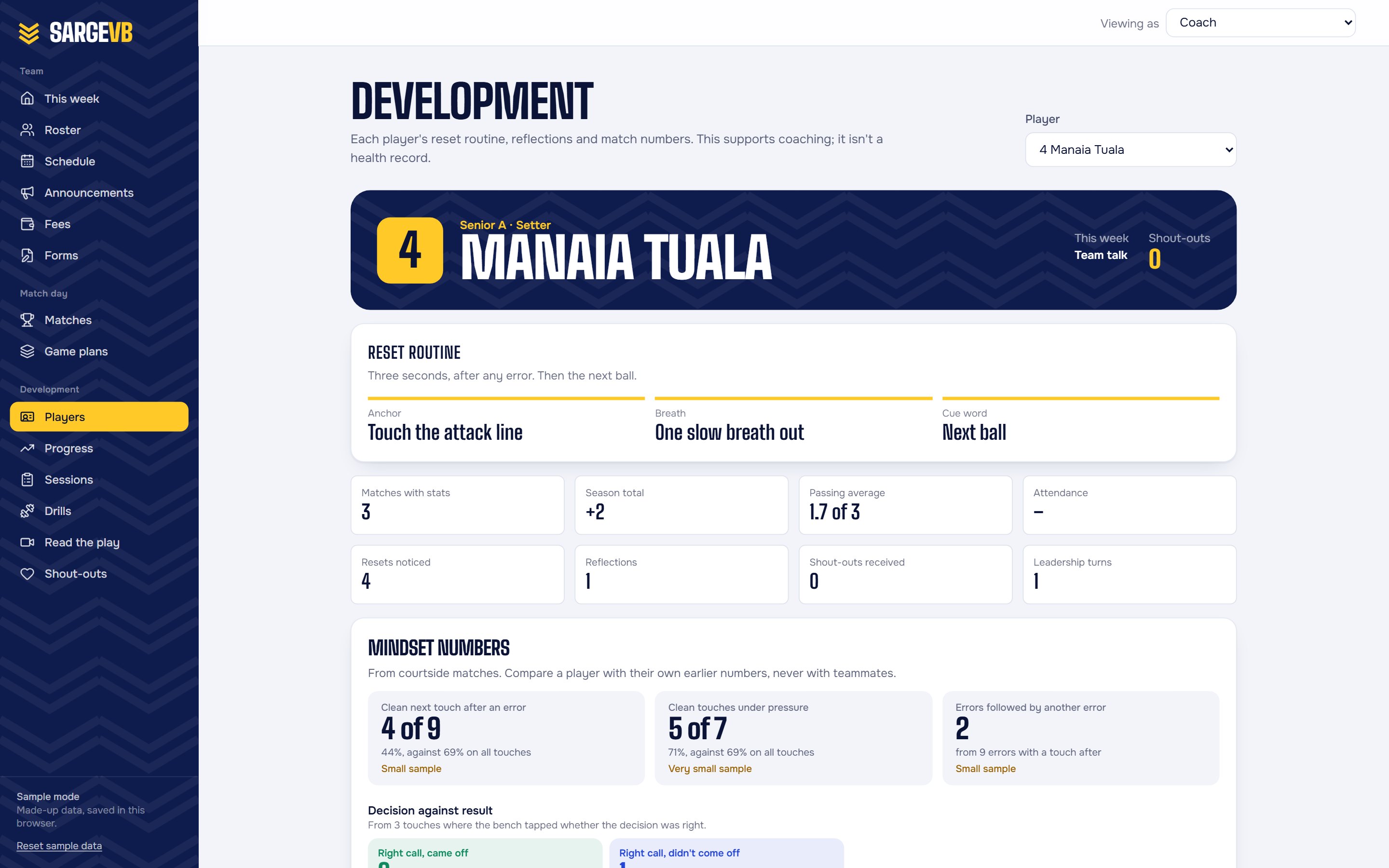
Each player names their own routine for after an error, and the app tracks how often they use it.
- Compare players with themselves
Mindset numbers are only ever compared with a player's own earlier games, never with teammates.
- Made-up data first
The whole prototype runs on sample players and matches, so it can be shown without sharing anyone's details.
One app for match day and every day in between.
Every name, score and dollar figure in these screens is made up.
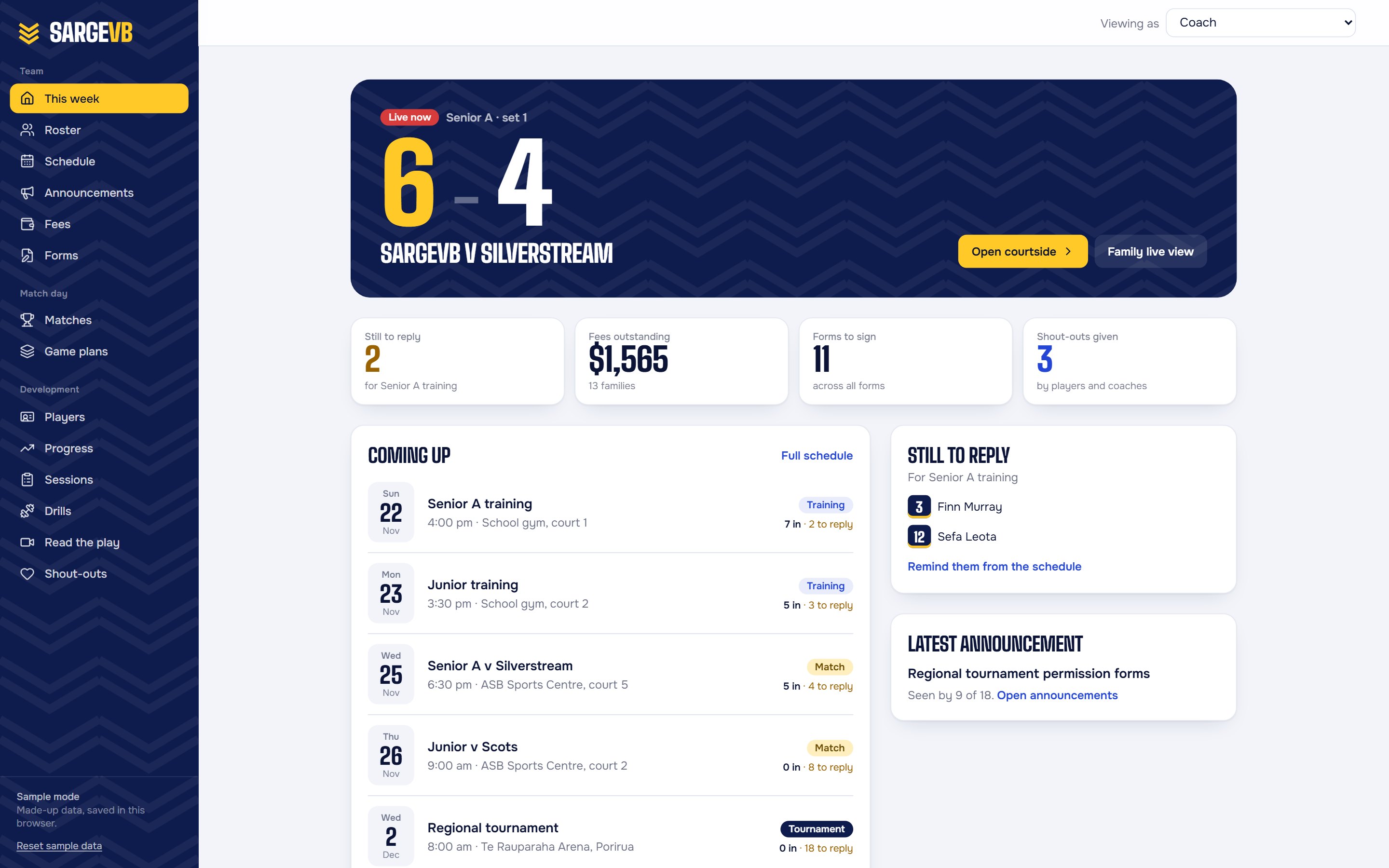
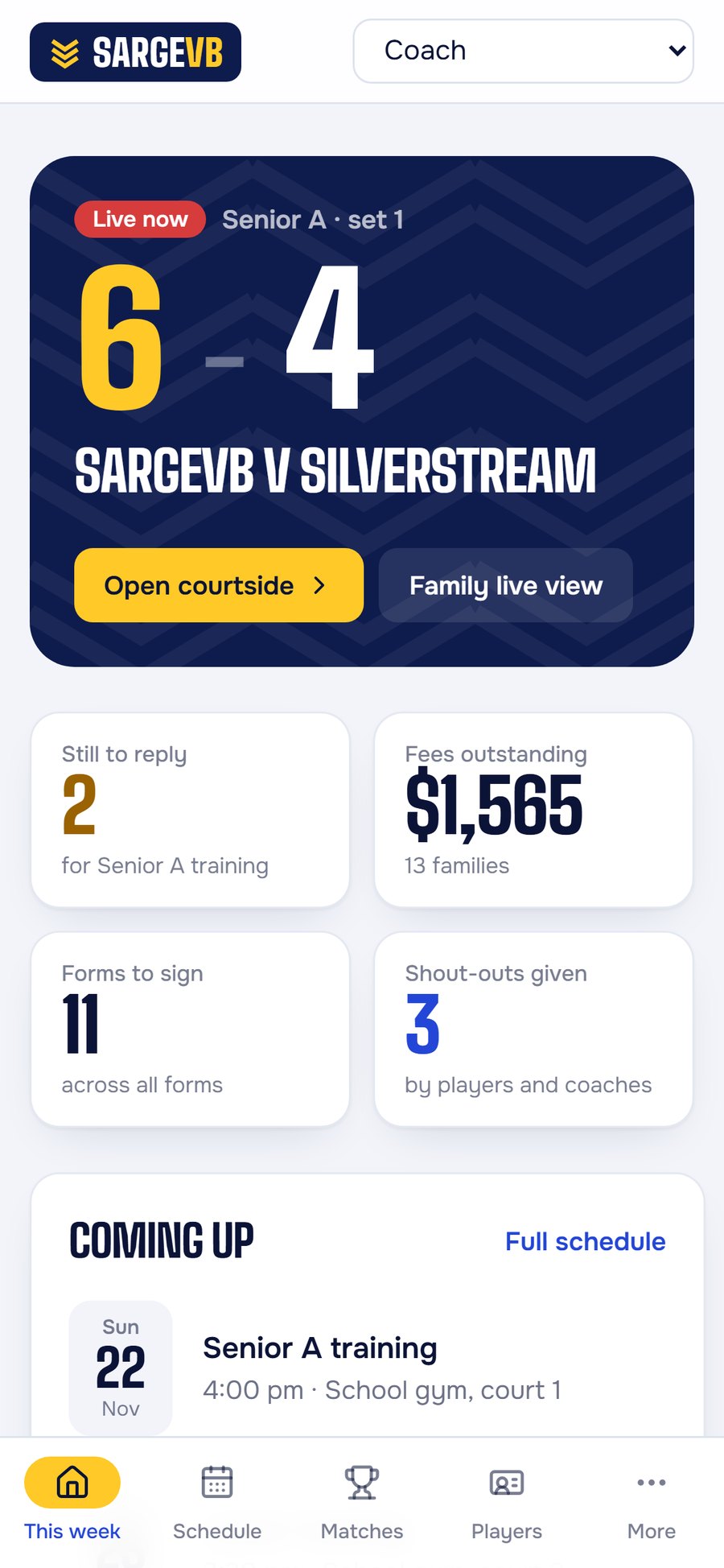
This week, at a glance
A live score from the current match, who hasn't replied to training, outstanding fees and forms, and what's coming up.
Why: a coach should know what needs doing in the time it takes to open the app.
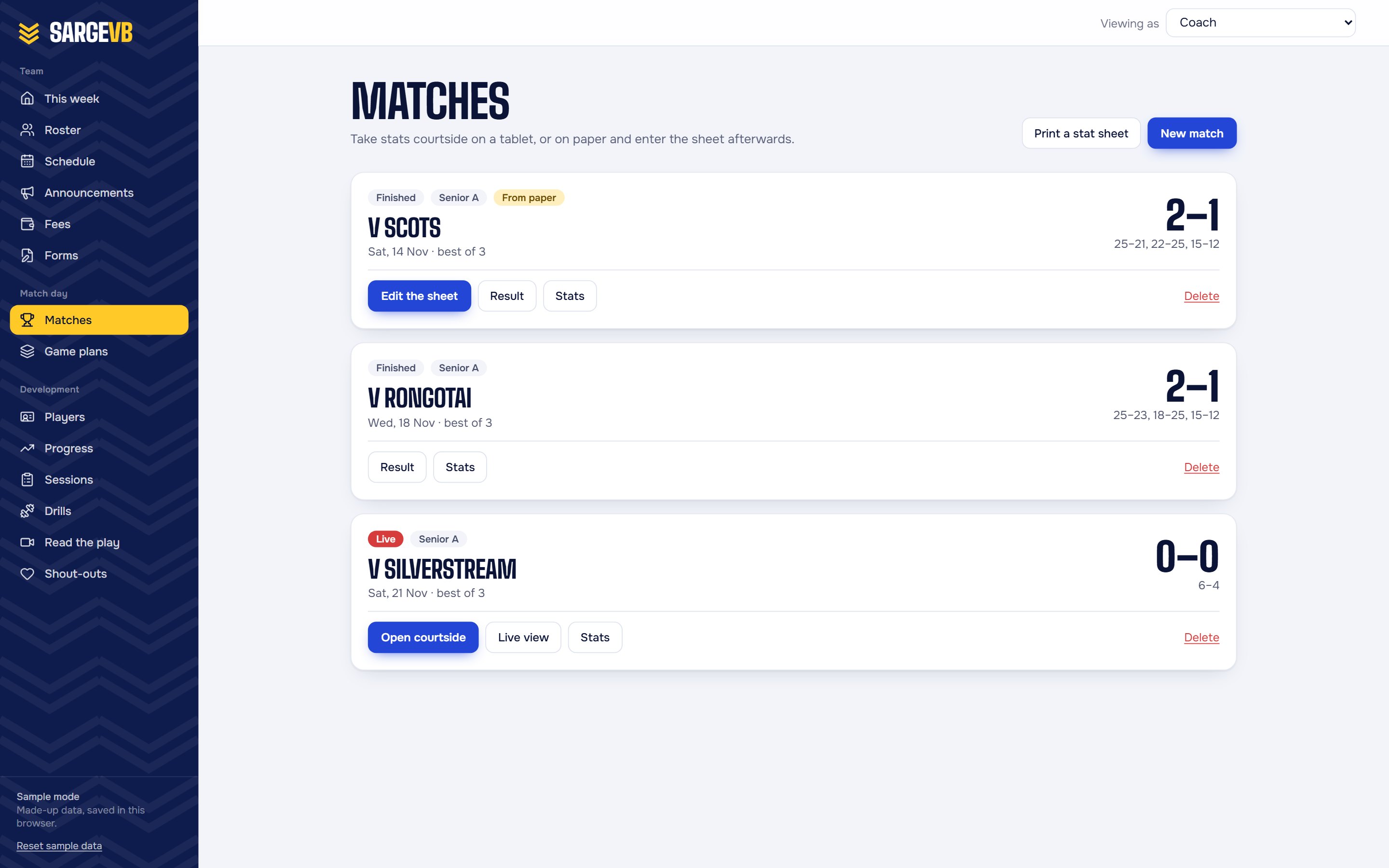
The stat sheet, courtside
Take stats on a tablet during the match, or enter the paper sheet afterwards. Each match keeps its result, set scores and stats.
Why: the sheet only helps if the numbers actually get entered.
The mental game, measured
Each player's reset routine, their reflections and their numbers under pressure: clean next touch after an error, errors followed by another error, and the calls made in the moment.
Why: mistakes are part of the game. How a player responds is what can be coached.
A prototype, ready to put in front of the coach.
If this sounds like your club.
Clubs and teams run on volunteers' spare time.